The Turkish bath took shape as the Roman and Byzantine bathing tradition was transformed in Anatolia. Under the Seljuks and Ottomans it became far more than a place to wash — it became one of the centres of neighbourhood life.
Architecture: three sections
A classical hammam has three main sections. The soğukluk (cold room) is at the entrance and serves as the changing and resting area. The ılıklık (warm room) is a transitional space that lets the body adjust to the heat. The sıcaklık (hot room) is the main hall, home to the belly stone and the treatments.
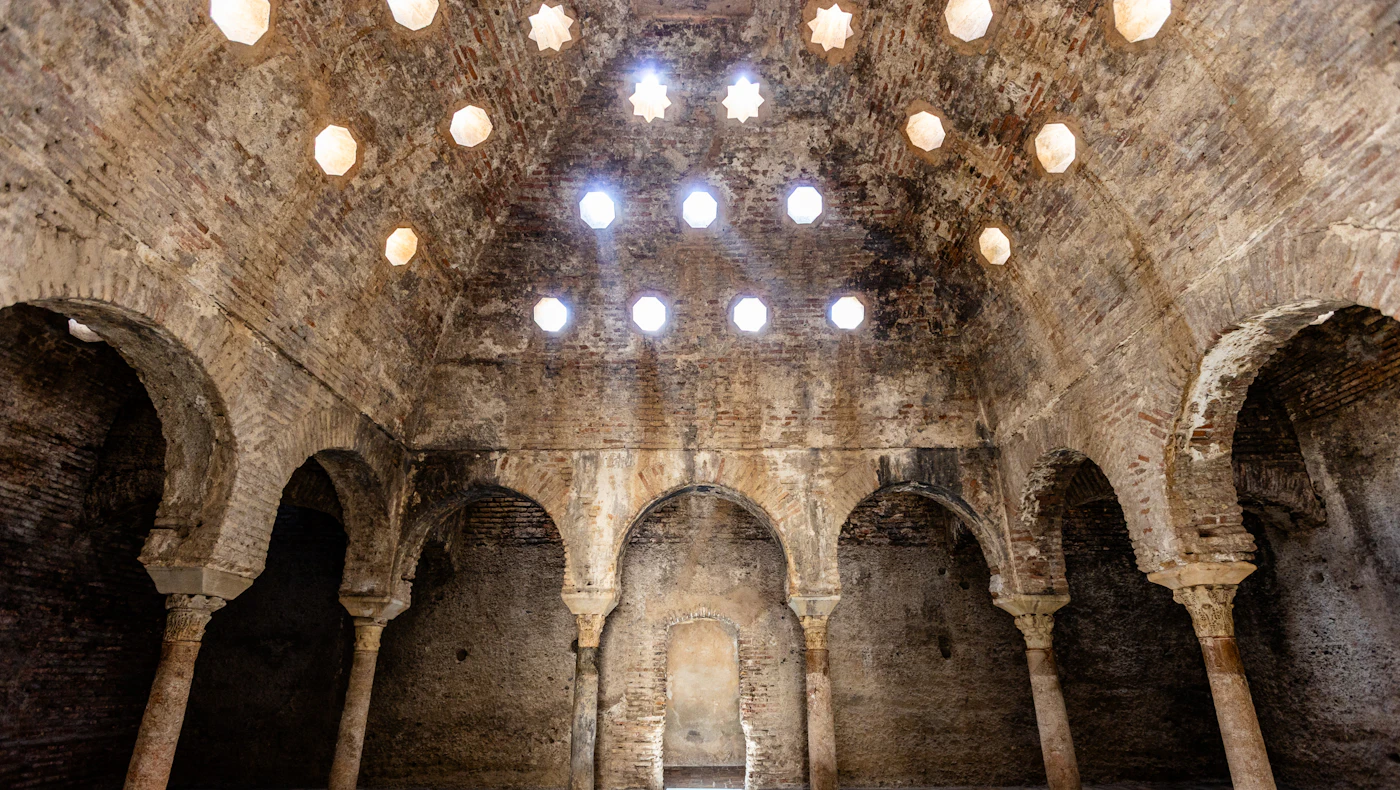
The small glass openings in the domes are known as “elephant eyes”. They provide natural light and help the steam disperse in a controlled way. The characteristic light of a hammam comes from this detail.
The belly stone
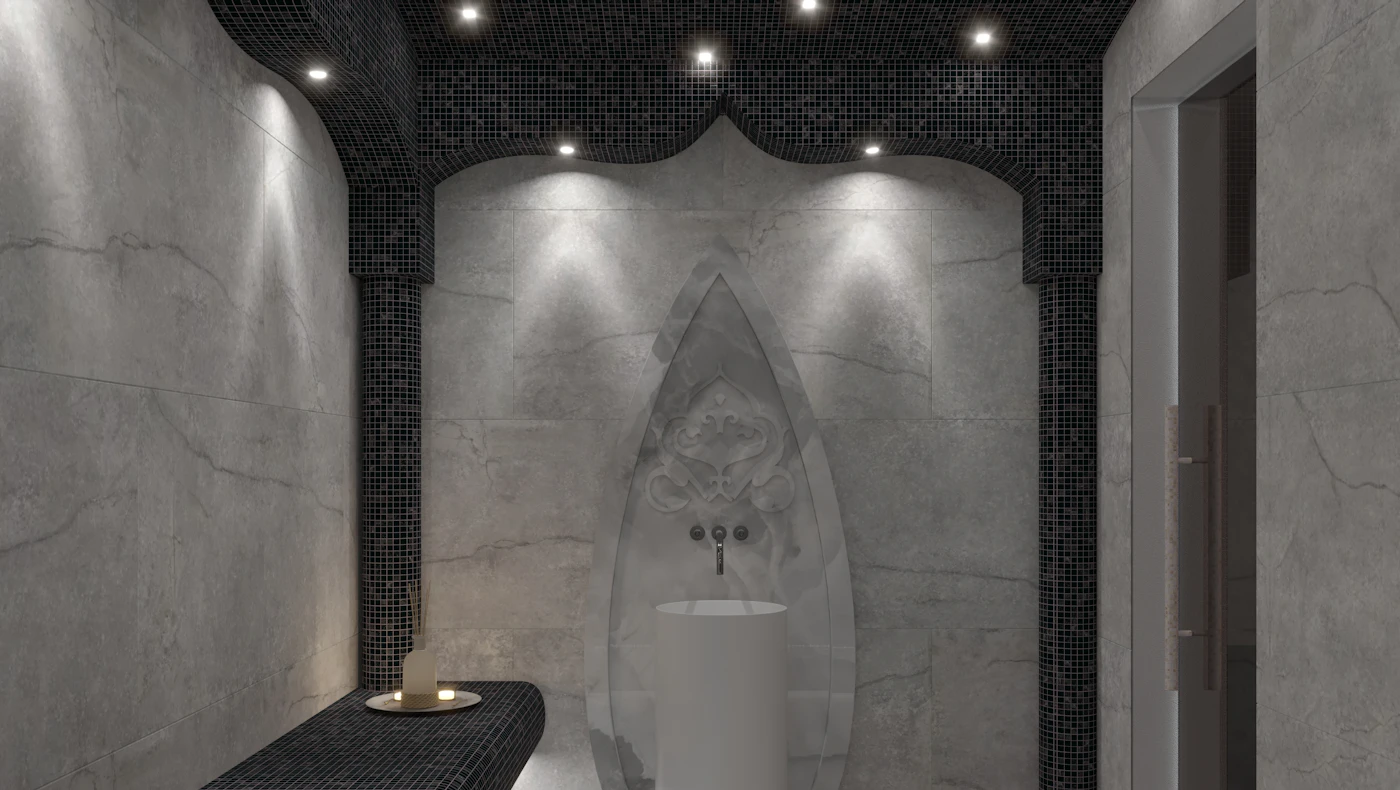
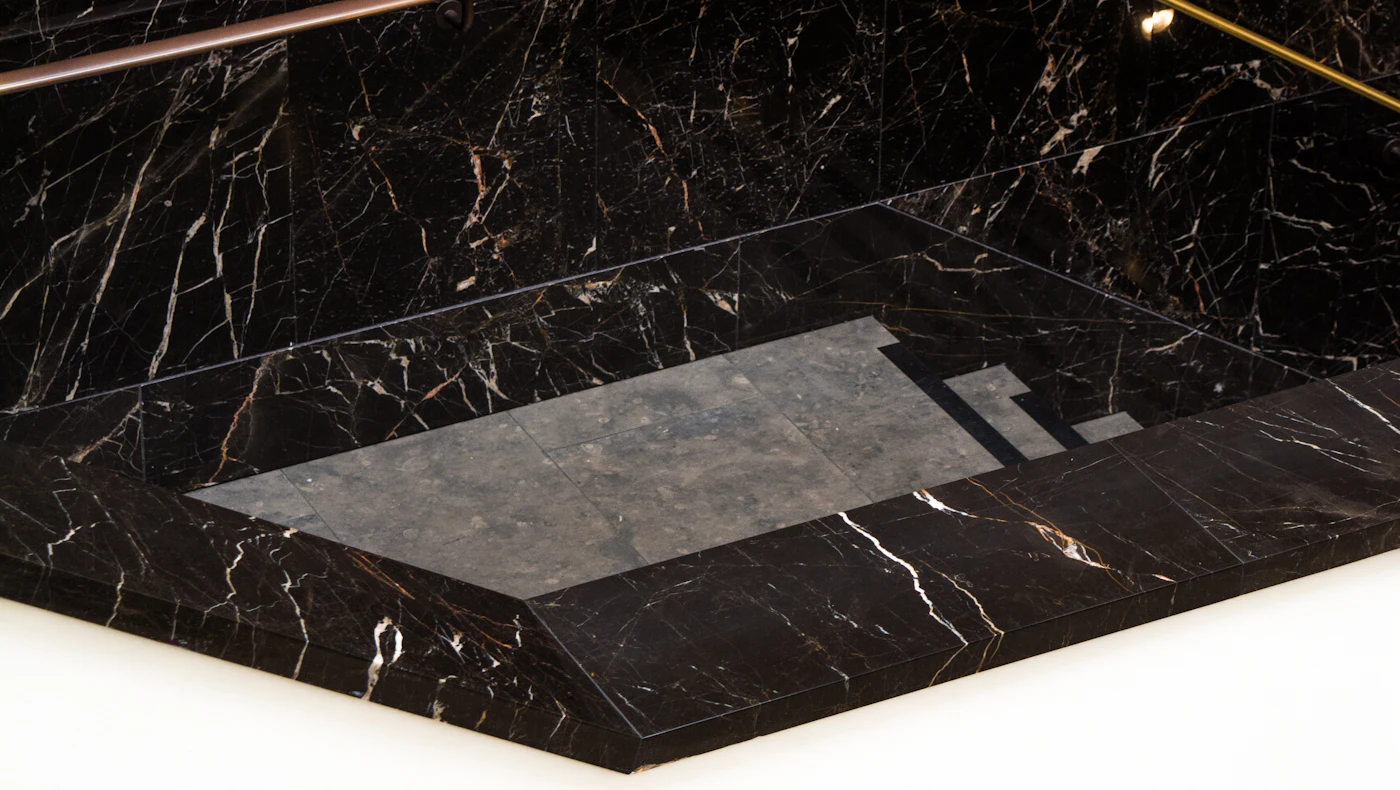
The marble platform at the centre of the hot room, heated from below, is the heart of the hammam. Heat rises from a cavity beneath it. Guests lie here to warm up, and the scrub and foam treatments take place on it.
Basins and water
Marble basins line the walls, each with hot and cold taps. Traditional etiquette requires taking water from the basin with a bowl and pouring it over yourself; entering the basin is not considered appropriate.
Etiquette and habits
Hammam etiquette rests on respect for other guests’ comfort: speaking quietly, always keeping your peshtemal on, leaving shared areas clean. Loud conversation and photography have traditionally been frowned upon.
Social role
Throughout history hammams were never only about cleanliness. Rituals such as the bride’s bath, the groom’s bath and the fortieth-day bath tied the hammam to the important thresholds of life. For women it was also one of the few public spaces where long hours could be spent.
Today
Modern hammams keep the same architectural logic while updating standards of hygiene, privacy and comfort. Separate sections, lockable lockers, single-use scrub mitts and booking systems are today’s version of the tradition. The one thing that has not changed is that slow time spent in the warmth of marble.